
WhatsApp is finally letting you hide your phone number behind a custom username. While it's a massive win for privacy, cybersecurity experts warn it could unleash a wave of identity scams. Here is what you need to know.

Despite a dull macro-economic environment almost all the FMCG companies posted a decent volume growth.

The Budget emerges as a measured, credible and forward-looking policy document that reinforces India's commitment to remaining a stable, reform-oriented economy amid an increasingly fragmented global landscape, says A Balasubramanian.

The changes to the original draft of the Direct Taxes Code are going to cost taxpayers, with the government planning to significantly alter the slabs.

The government now ends its mandate with reaffirmation in the vote-on-account of the same goals, for which it claims to have a clear line of sight.

After spending 31 months in Chennai's Puzhal prison, Ahmed Buhari is finally breathing free, as courts across the country quashed proceedings linked to his group company Coastal Energy.

Having altered the income tax slabs in the Budget, the Finance Ministry on Thursday said the next round of widening of the tax slabs is possible when the direct taxes code (DTC) comes into effect, likely from 2011-12.
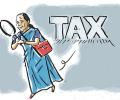
Net direct tax collection in the April-June quarter of the current fiscal rose by 41 per cent to Rs 3,54,569.74 crore, Minister of State for Finance Pankaj Chaudhary informed the Lok Sabha. During the April-June period of 2021-22, the government had collected a net direct tax of Rs 2,50,881.08 crore. At the same time, net indirect tax collection including Goods and Services Tax (GST) and custom duty increased by 9.4 per cent to Rs 3,44,056 crore as against Rs 3,14,476 crore in the first quarter of the previous fiscal, he said in a written reply.

Trent reported a 20 per cent revenue rebound in Q4FY26, driven by a recovery in like-for-like growth and significant store additions. The company's board has approved raising up to 2,500 crore in equity to fund investments in store network upgrades, new brands, supply chain automation, and Star Bazaar expansion, alongside a 1:2 bonus issue and a 6 dividend.

The contrast with the old Income-Tax Act is stark. The 1961 law ran into 512,000 words; the 2025 one pares that down to 259,000. Chapters have been cut from 47 to 23, while sections have reduced from 819 to 536. One of the clearest changes is terminological. The confusing twin concepts of 'assessment year' and 'previous year' have been scrapped.

Certain provisions of the code would delay the negotiation process, increase the tax liabilities and introduce uncertainties due to the General Anti-Avoidance rules.

The proposed Direct Taxes Code Bill, 2009, should change our tax liability as well as the way we invest.

Transporters across Maharashtra have announced a statewide strike to protest against e-challans and other issues, potentially disrupting transport services including school buses and commercial vehicles.

'We have now drastically simplified it, primarily to two rates in long-term capital gains: 20% and the applicable rates. Similarly, in short-term capital gains.' 'For listed shares, there is a slight increase, but for unlisted shares, where indexation benefits are removed, there is a reduction in rates, benefiting unlisted companies, venture capital firms, etc.' 'Similarly, in real estate, wherever returns are higher, the new structure is beneficial. In very few cases, returns are lower, and those are more of an exception.'

Avoid donating without checking the receipt proforma showing the political party's ECI registration number and PAN.

Taxpayers are not likely to get as much relief as was proposed in the discussion paper on the Direct Taxes Code last year, with the Finance Ministry saying that the tax slabs may be narrowed down in the bill, slated to be tabled in the monsoon session of Parliament.

'The trade deficit in some sectors is huge and that is an area of opportunity to localise.'

After the Cabinet approved the Direct Taxes Code Bill, Finance Minister Pranab Mukherjee had yesterday said the corporate tax rate is sought to be retained at the present level of 30 per cent, but there will not be any surcharge or cesses on it.

Wants investment limit for tax savings schemes be increased to Rs 320,000

The government has shown its efforts in phasing out the four-and-a-half-decade old Income Tax Act of 1961 with a new and 'taxpayer friendly' Code. The Code is designed to provide stability to the tax regime and is based on the accepted principles of taxation and best international practices.

Sustaining 8 per cent-plus growth rates is necessary if we are to reach high-income status by 2047, points out Amitabh Kant.

Rahul Gandhi said that had an INDIA Bloc government negotiated the trade agreement with the US, it would have told US President Donald Trump that he should treat India as an equal.
The draft is in the form of a discussion paper, and has taken radical steps to improvise on the paper released in 2009 on the same issue.

India's real gross domestic product (GDP) is likely to grow at 7.5 per cent in FY26 and moderate to 7 per cent in the subsequent fiscal year, a domestic rating agency said on Wednesday.

A special NIA court in Jammu and Kashmir has ordered the immediate attachment of land belonging to Ghulam Nabi Fai, a US-based Kashmiri lobbyist and convicted agent of Pakistan's Inter-Services Intelligence (ISI).

Recently, Finance Minister Pranab Mukherjee had assured industry that the government was open to re-examining proposals in seven key areas.
The annual Finance Bill may soon become far less exciting as the government plans to lift the veil of secrecy surrounding tax proposals in Budget. Once the Direct Taxes Code (DTC) and Goods and Services Tax (GST) are in place, the finance ministry will adopt a public discussion approach for most future decisions, while confining the annual exercise to a few procedural changes.

The panel of Parliament examining the Direct Taxes Code (DTC) Bill has almost finalised its recommendations. It wants more taxpayer-friendly measures.

'I do believe there will be a resolution in the next couple of months on the penal tariff and hopefully on the reciprocal tariff also.'

Salaried taxpayers may have less kitty for holidays from April 2012, with the government proposing to scrap tax incentives on leave travel allowance in the new direct tax regime DTC.

Tax rates would be made known only in the proposed Act, a bill for which will be introduced in Parliament in the coming monsoon session.

Fresh plans of privatisation or divestment in central public sector enterprises and public sector banks might take a back seat this financial year because these may require a large consensus among coalition partners.
Finance Minister Pranab Mukherjee's Budget had quite a few tax-related proposals, although initially they did not appear to be too significant. However, read on to find out what are the proposals related to Direct and Indirect taxes that he has made and how the two affect you!

The Indian government has expressed its disagreement with the IMF staff's 'baseline' assumption that the 50 per cent US tariffs on its goods exports 'would remain in place indefinitely', based on which the staff pegged the country's GDP growth at 6.6 per cent this year, and pared its 2026-27 projection by 20 basis points to 6.2 per cent.

'The adjustments (of tax slabs and standard deduction) will reduce the tax burden for salaried individuals with an income of around Rs 20 lakh by approximately Rs 18,000.' 'For non-salaried individuals with the same income level, the savings will be around Rs 10,000.'
In its report, which was submitted to the Lok Sabha Speaker Meira Kumar on Friday, the Standing Committee on Finance suggested that the wealth tax limit be pegged at Rs 5 crore (Rs 50 million), while the Securities Transaction Tax be abolished.

Finance Minister Pranab Mukherjee wants the income tax forms to be simple so that a taxpayer can understand his liability without consulting experts or chartered accountants.

The government has proposed to replace the Income Tax Act of 1961 with a direct taxes code, which would simplify the legislation.

Keeping a track of the latest developments will help you plan your investments wisely

Taxing the existing retirement benefits schemes would affect the working class, the labour ministry said.
